
Traditional AI adoption
- Introduce another AI tool
- Train people to write prompts
- Ask employees to change their habits
- Measure licenses, logins, and usage
- Continue pushing adoption
A simpler path to AI transformation
SHIM gives a team one simple interface for a process that is currently spread across people and systems. Then it uses AI behind that interface to remove manual steps one at a time.
People adopt a better way of working. The workflow gradually adopts AI.
SHIM stands for Systems Harmonization & Iterative Modernization. Created by Very Big Things.

Why SHIM exists
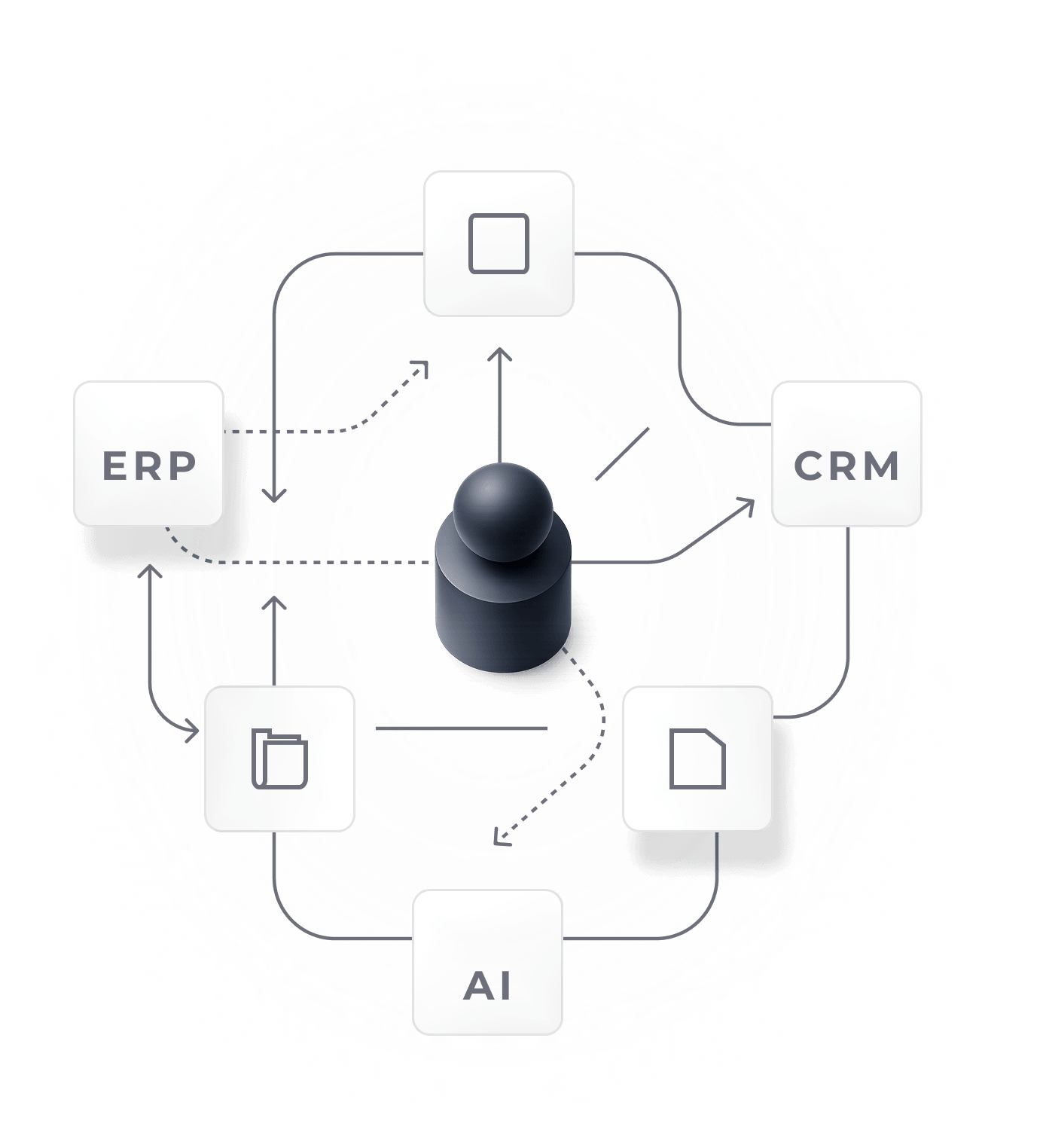
Most important processes already use software. They just use too much of it. One process may span email, spreadsheets, CRM, ERP, documents, chat, approvals, and knowledge held in people’s heads.
Employees spend their day searching for context, copying information, remembering what happened, and moving the work from one system to the next. They become the integration layer.
Giving them another AI tool does not fix that. Before AI can take work off their plates, the process needs one place to live.
An AI tool can make one task faster. It cannot transform a process it cannot see end to end.
“Most organizations don’t have an AI problem. They have a work problem, where people spend their days carrying information between systems that should be talking to each other. SHIM tackles that first. It puts the work in one place, frees people from being the glue, and lets them focus on the thinking and decisions that actually matter.”
The heart of SHIM
SHIM is simple by design. First, give the process one clear place to operate. Then let that system do more of the work through measured AI improvements.
Before SHIM
Each step sits in a different system, channel, or person’s head. Employees gather the context, coordinate the handoffs, remember the state, and manually keep the process moving.
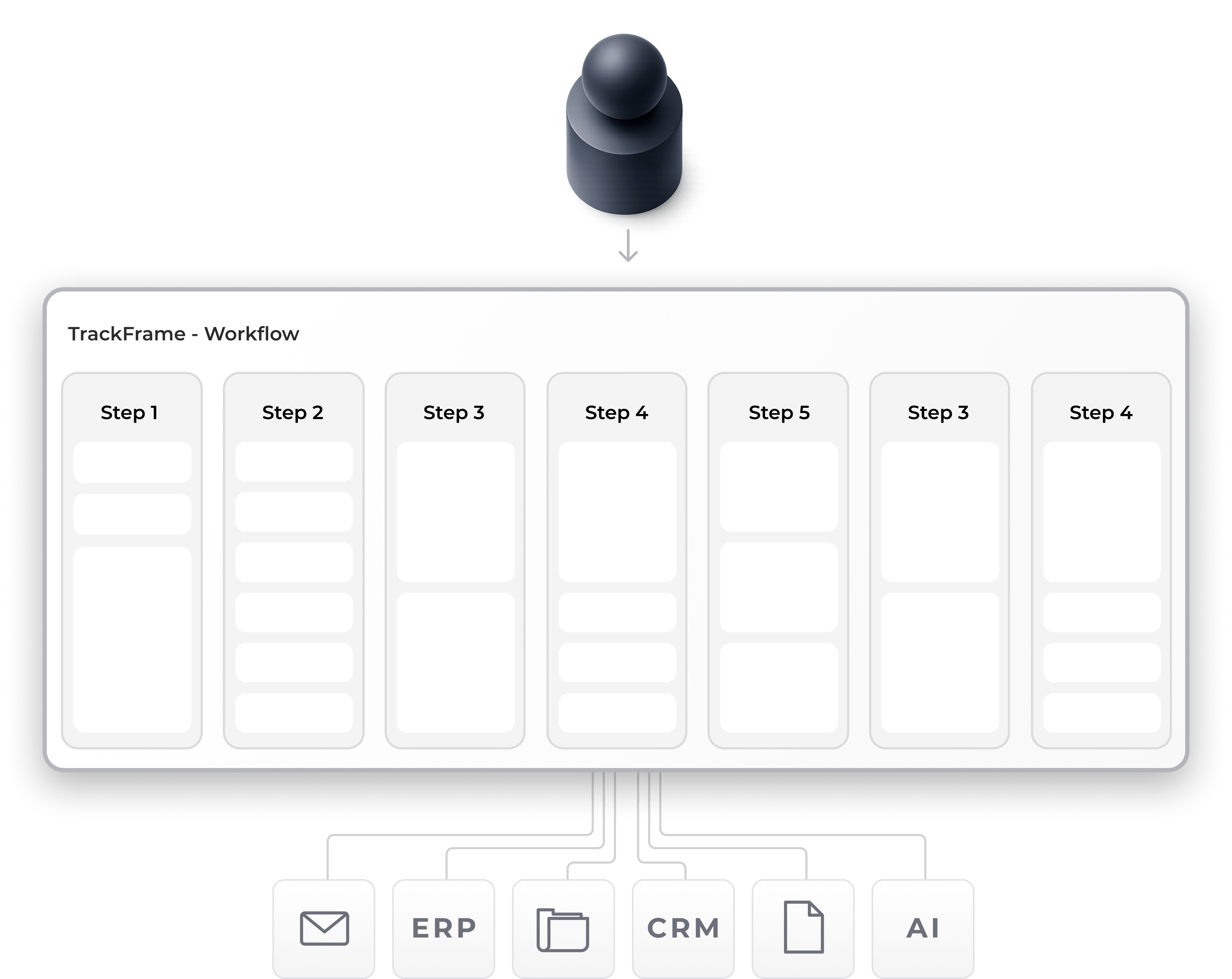
Systems Harmonization
Build a purpose-built interface around the process and connect it to the systems already behind the work. The team helps shape the experience, so it reflects how the process actually operates.
From day one, people stop bouncing between systems and can run the process in one place.
Iterative Modernization
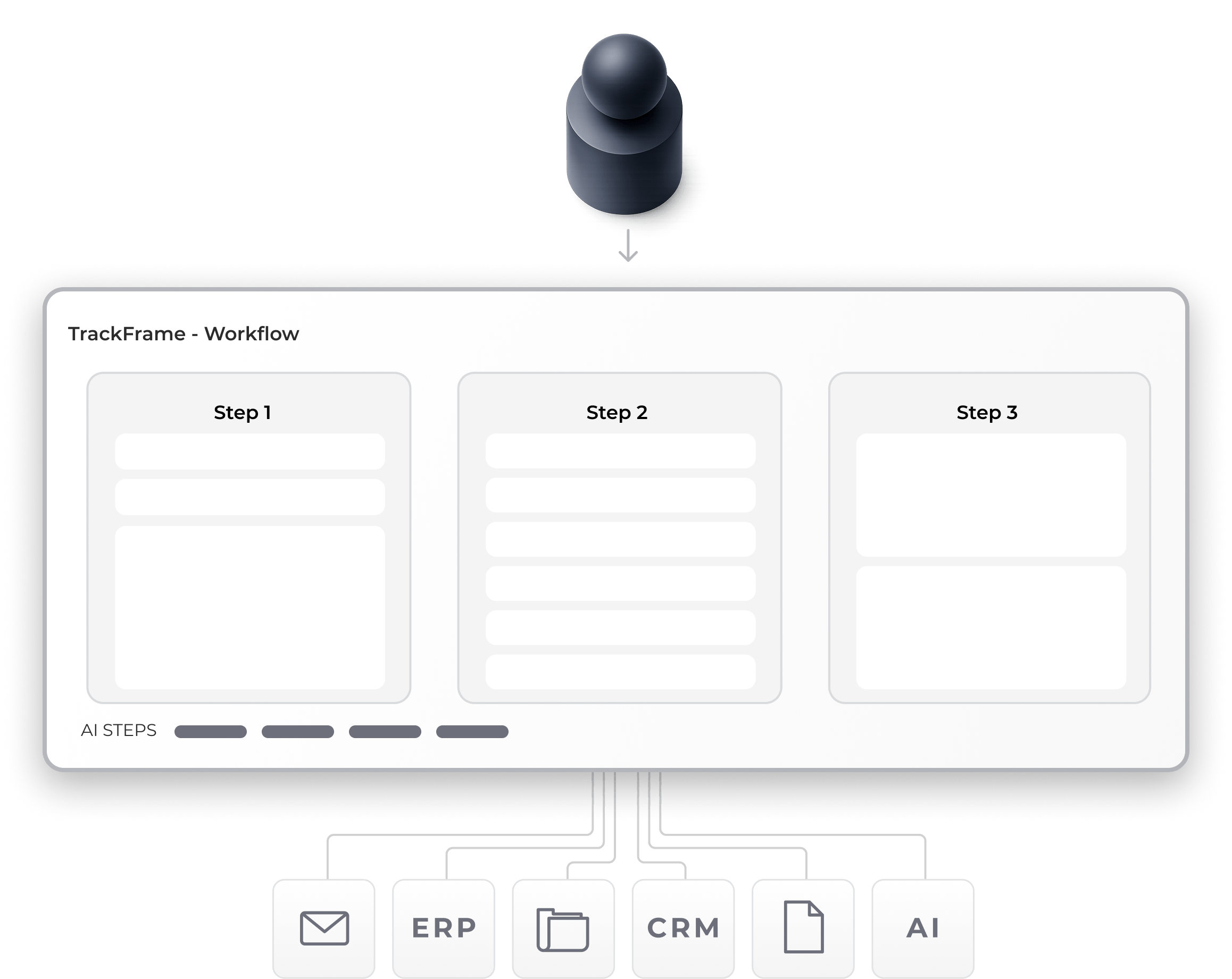
Add AI behind the same interface to gather context, prepare work, check completeness, draft outputs, recommend actions, and complete repeatable steps. Ship each improvement to real users, measure what changes, and continue.
The interface stays familiar. The work inside it keeps shrinking.
This is the heart of SHIM:
Give the process one place to operate.Then let the system do more of the work.What it means in practice
Today, customer onboarding may span CRM, contracts, billing, identity, documentation, email, support, and a spreadsheet someone created because the other systems do not show the complete picture.
Before SHIM
Sales sends the handoff through email. Operations searches the CRM and contract files. Finance verifies billing. Customer success tracks progress in a spreadsheet. Every group sees only part of the onboarding state.
Harmonize
A purpose-built onboarding interface presents the customer, current state, owners, tasks, required information, approvals, exceptions, and next actions in one place.
It reads from and writes back to the existing systems.
Iterate
AI is introduced through a sequence of production releases.
The user keeps working in the same interface.The number of steps they personally perform keeps shrinking.
A different approach to adoption
Most enterprise AI programs begin by introducing new tools, training people on prompts, and asking employees to change how they work.
SHIM reverses that model. The team helps create one useful interface around a process it already understands. AI is then introduced behind that interface as improvements to the work itself.
Employees do not experience a sequence of AI rollouts. They experience fewer searches, fewer handoffs, fewer repetitive steps, fewer screens, and less work required to reach the same outcome.
Adoption happens because the experience gets better, not because the organization successfully convinced everyone to use AI.
AI should be unobtrusive to the user, not opaque to the organization.The workflow should still make clear where AI prepared, recommended, or completed work, where people remain responsible, and how quality is measured.
“As a CIO, the hardest part of AI transformation isn’t the technology — it’s getting the organization to move with it. SHIM is the first methodology I’ve seen that treats technical change and organizational adoption as one problem, not two separate ones.”
The formal method
The employee experience is simple. Underneath it, SHIM uses four connected activities to choose the right process, create the interface, improve it in production, and expand what works.
Align
Select one important process with meaningful economics, a committed owner, and a practical path to production. Observe how the work actually happens and define the outcome the transformation must improve.
Harmonize
Build the purpose-built system of work and connect it to the people, information, systems, decisions, approvals, and exceptions involved.
Iterate
Choose one valuable or painful step, redesign it, add the appropriate AI or automation, ship it to real users, measure what changed, and repeat.
The SHIM Loop
Orchestrate
Allow the first process to take on more responsibility and use its proven patterns, connections, controls, and lessons to transform additional processes.
Where it can lead
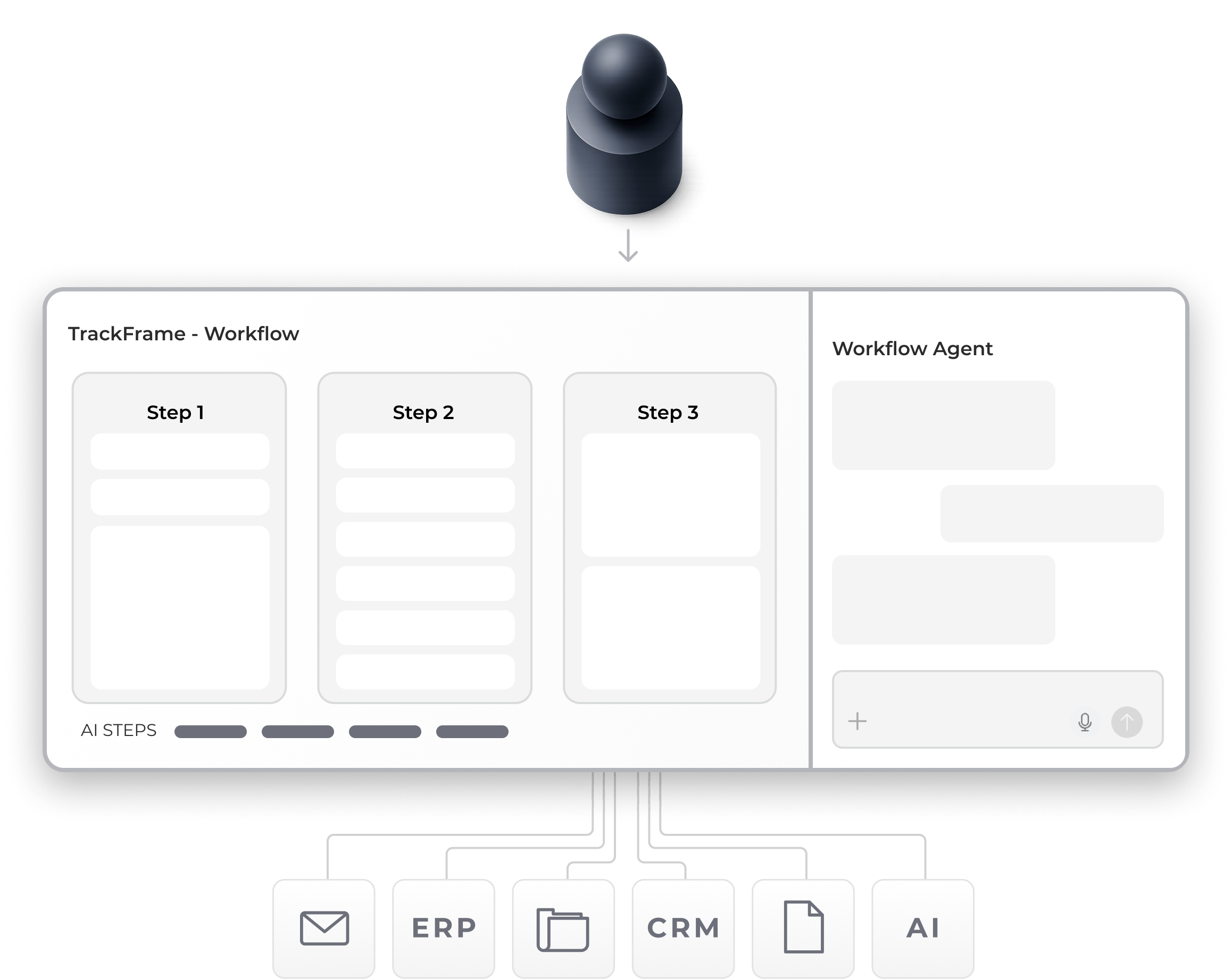
An agent should not be placed on top of a fragmented process and expected to figure it out. It becomes useful only after the workflow, context, controls, quality, and trust have been established.
Over time, people may move from performing every step to reviewing prepared work, making important decisions, and directing the system. In mature Tracks, an agent may coordinate larger portions of the process and ask for human input where judgment or approval is required.
The goal is not maximum autonomy. The goal is the right division of work between people and technology.
Important distinctions
SHIM does not begin by distributing copilots, chatbots, or prompt tools and asking employees to find ways to use them.
The systems that store important records can remain. SHIM creates the interface through which the process operates across them.
AI is introduced to one step at a time, in production, with human control and measurable results.
Agents become useful only after the process, context, controls, and operating trust have been established.
SHIM is a methodology, not a software platform.It can be implemented using different technologies and architectures.
When Very Big Things implements SHIM, TrackFrame may provide the reusable foundation beneath the resulting workflows, but TrackFrame is not SHIM and is not required to use the method.
Learn about TrackFrameDeveloped through real work
SHIM was formalized from patterns observed across years of building and operating AI-enabled workflows inside established organizations.
Some of the work preceded the SHIM name, but it revealed the implementation and adoption patterns the methodology now makes explicit.
World Emblem
A focused production workflow proved significant value and created the confidence and reusable capability to expand AI-enabled work across additional departments.
Read the case studyZumba
Content work spanning markets, people, approvals, and systems was redesigned around one connected production experience that became more capable over time.
Read the case studyNational Food Distributor
Operational data, predictive models, explainability, and human judgment were brought together inside one production purchasing capability.
Read the case studyCreated by Very Big Things through production work across mid-market and Fortune 500 environments.
Go deeper
Go deeper into the method, its terms, the SHIM Loop, adoption model, implementation patterns, and practical starting points.
Read the GuideUse practical tools for identifying a Track, understanding the current process, prioritizing opportunities, and defining the first production releases.
Explore ResourcesLearn how to use, teach, adapt, and properly attribute the methodology inside your organization.
View Use and Attribution